Reading Lists by Mood
Match the book to the feeling — stacks for restless, heartbroken, curious and cosy moods.
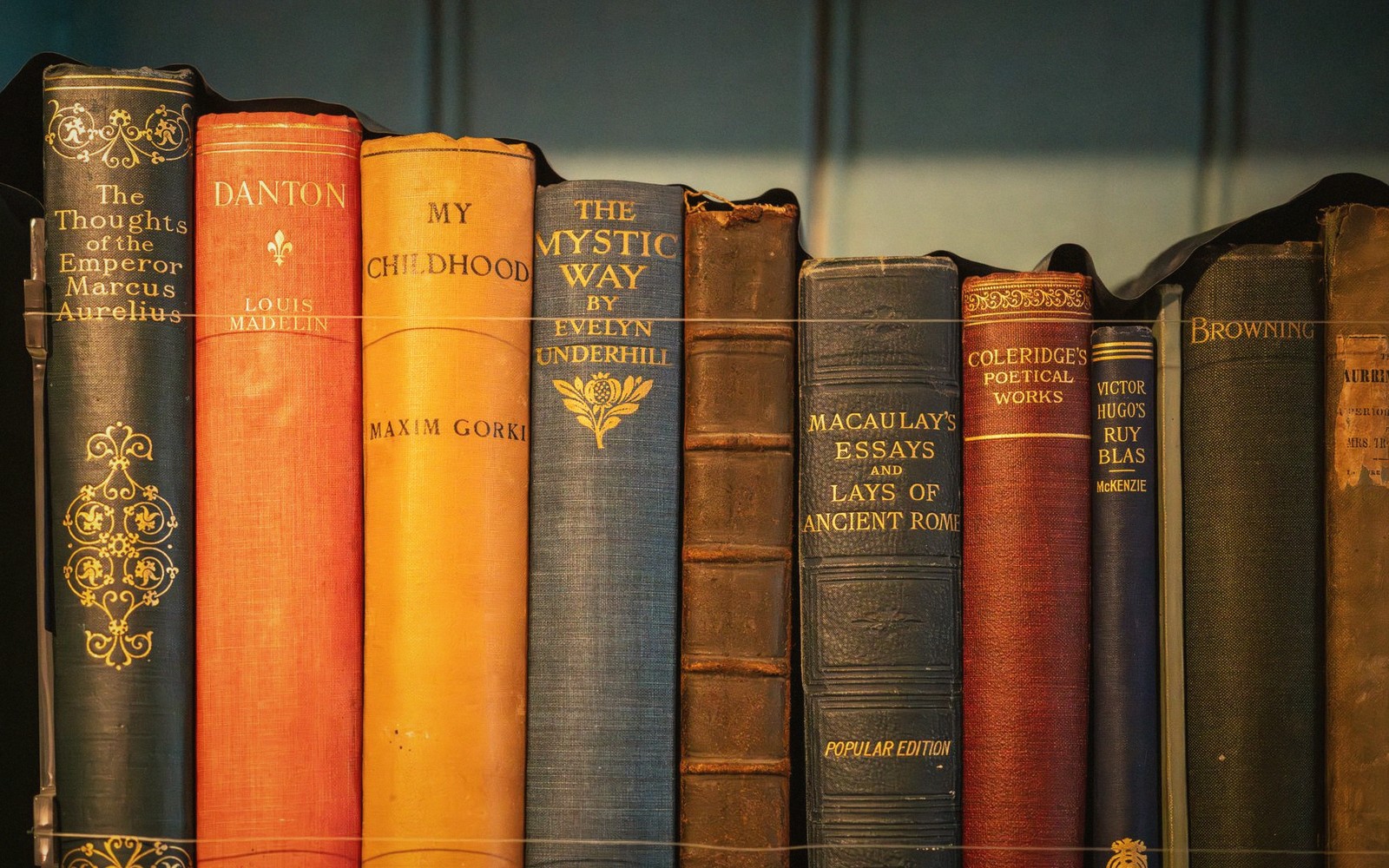
The right book at the right moment changes everything
Not every book fits every day. A novel that floors you in August might bounce off you entirely in February — not because the book has changed, but because you have. Matching a book to a mood isn't lazy reading; it's honest reading. Here are four stacks built for the feeling you're actually in.
When You're Restless
Restlessness is a specific condition: you want something to happen, you can't settle, the ordinary world feels too small. What you need is a book that moves fast enough to outpace the fidget — but one with enough under the surface to hold you once you're hooked.
Matching a book to a mood isn't lazy reading; it's honest reading.
Kurt Vonnegut is an obvious but correct answer. His novels arrive quickly, speak bluntly, and refuse to be boring for even a page. Slaughterhouse-Five moves through time without apology; Cat's Cradle is satirical, quick and genuinely strange. Either will catch a restless reader by the collar.
For restlessness with a mythological tilt, Madeline Miller's Circe is almost engineered for this mood: the pace builds steadily, the stakes keep rising, and there's a satisfying sense of a character who refuses to be kept still — which tends to suit readers who feel the same way.
If what's making you restless is a hunger for ideas, Richard Powers rewards that itch. The Overstory is a large book that somehow reads with urgency; Bewilderment is slimmer and propulsive. Either way, you won't be bored.
When You're Heartbroken
Heartbreak wants company, not distraction. There's a reason sad readers reach for sad books — it's not masochism but recognition. A novel that knows what grief or loss actually feels like is its own form of consolation.
Hanya Yanagihara's A Little Life is one of the most discussed novels of recent years for reasons that have everything to do with emotional scale. It is genuinely difficult to read in places; it is also genuinely extraordinary. Be warned, and read it anyway.
Toni Morrison is always the right answer for heartbreak, because she understood that sorrow and beauty are not opposites. Beloved is her masterwork — formally daring, emotionally precise, with a power that doesn't diminish on rereading. Jazz and Song of Solomon offer similar gifts.
Charlotte Brontë's Jane Eyre has been consoling heartbroken readers for generations, and the reason is simple: Jane's dignity under pain feels instructive. She suffers, and she does not collapse. That's a particular kind of company when you need it most.
For something quieter, Susanna Clarke's Piranesi is remarkable for the way it handles loss — gently, sideways, through a puzzle-box structure that slowly reveals something genuinely affecting. It is a heartbreak book in disguise.
When You're Curious
Curiosity is the best reading mood, because almost anything will satisfy it. The risk is decision paralysis — too many options for a mind already buzzing. So: a few anchors.
Umberto Eco is the great novelist of intellectual curiosity. The Name of the Rose is a medieval murder mystery that is also a sustained meditation on knowledge, interpretation and the history of ideas; it trusts its readers completely and rewards them accordingly. Foucault's Pendulum is wilder and more baroque — wonderful for a mind that wants to sprint.
Aldous Huxley's essay collections and novels offer a different kind of curiosity-feed: a restless, wide-ranging intelligence working through ideas from science to art to mysticism. Point Counter Point puts ideas into human collision in a way that is both playful and searching.
Min Jin Lee's Pachinko satisfies a more human kind of curiosity — the desire to understand a world you don't know, through characters you come to love. Four generations of a Korean family across the twentieth century: it is history as intimacy, and it answers questions you hadn't thought to ask.
For the curious reader who hasn't strayed into historical fiction, Hilary Mantel's Wolf Hall is the case for the genre at its very best. She makes the Tudor court feel not recreated but inhabited — urgent, alive, genuinely strange.
When You're Cosy
Cosy reading is not a lesser mode. The impulse to curl up with something warm and absorbing is entirely legitimate, and the books that deliver it well are doing something real.
J.D. Salinger's The Catcher in the Rye is an unusual cosy — brash, funny, a little heartbreaking — but it has the quality all great cosy reads share: a voice so distinctive you feel accompanied. You are not alone in the book.
For unambiguous warmth, a long novel with a large cast of characters you fall in love with over four hundred pages is the form you want. Pachinko works here as much as it does for the curious mood; so does A Little Life, provided you're prepared for the emotional cost.
And sometimes cosy means a book you've already read — which is its own kind of argument. A novel that gave you something the first time will give you something different the second. The familiarity is the point. Whatever book made you a reader is almost certainly a perfect cosy re-read, and it will be waiting for you exactly where you left it.
The writers
Kurt Vonnegut
Author
American novelist, author of Slaughterhouse-Five and Cat's Cradle
Madeline Miller
Author
American novelist, author of Circe and The Song of Achilles
Hanya Yanagihara
Author
American novelist, author of A Little Life
Toni Morrison
Author
American novelist, Nobel laureate; author of Beloved, Jazz, Song of Solomon